Showing posts with label Personal. Show all posts

Tuesday, June 7, 2011

Press Release on Selangor Wesak Celebration

Press Release by Mr. Loka Ng Sai Kai, Chairman of Selangor Buddhist Development Committee and Working Committee Chairman for the Majlis Sambutan Hari Wesak 2011 Peringkat Negeri Selangor in conjunction with the Majlis Sambutan Hari Wesak 2011 Peringkat Negeri Selangor organized by the Selangor State Government with the support of Buddhist organizations in Selangor.

Dated : 5th June 2011                   Time : 8:30pm

a. Buddhist community began to request for Wesak to be declared as a public holiday since 1926 when the then abbot of Mahindarama Buddhist Temple, Ven. K. Gunaratana make the proposal to the then colonial government.

b. During the Japanese occupation, a Japanese official in Dec 1944 urged the Penang Buddhist community to make representation to the Japanese government to declare Wesak in the coming year as a public holiday.

c. After World War II, the British government said it will only consider declaring Wesak as a public holiday if both the Mahayana and Theravada traditions can agree on a same date to celebrate Wesak day. A meeting on 1st March 1949 at Penang Buddhist Association agrees to celebrate Wesak Day on the full moon of May.

d. On 12th April 1949, the colonial government declares Wesak Day which falls on 12th May 1949 as a public holiday in Penang, Melaka, Kedah and Perak. Government servants who are Buddhists in Selangor, Kelantan, Perlis, Terengganu and Negeri Sembilan were given a holiday on Wesak Day.

e. After many years of efforts by Buddhist and political leaders, the Federation of Malaya government finally declares on 3rd Jan 1962 that the government had adopted the day of Wesak as a public holiday for the whole federation beginning from 1962.

f. The ability to make Wesak as a public holiday was a memorable event and great achievement in the annals of Buddhism in this country. It has united the Buddhist community to work for a common interest in seeking the government’s recognition of the community stature as the second largest religious group in the country.

g. For many years after 1962, the Buddhist community noticed that while the Prime Minister will regularly issue public congratulatory messages in-conjunction with important celebration of major religions in Malaysia, the Prime Minister’s message for Wesak Day was always conspicuously missing. It was only in 1999 after years of representation by the Buddhist community leaders that the then Prime Minister began issuing congratulatory message for Wesak Day.

h. In the 1990s, the government began organizing official state or national events for major religions in this country. But official state or national events to celebrate Wesak Day was never organized by neither any state nor federal governments.

i. Requests have been conveyed to the federal government to organized official state events for the day of Wesak but it just fell on deaf ears.

j. Looking into the past efforts of our Buddhist predecessors, the Buddhist community just wanted to be given the necessary respect and recognition as the religion with the second largest following in this country. Based on the year 2000 population census, the Buddhist population comprised 20.2% of the citizens in this country.

k. Tonight on the 5th of June 2011, the Selangor State Government had taken the lead by organizing the first ever Selangor State Level Wesak Celebration in-conjunction with this year’s Wesak Day. Never in the history of the nation have any state or even the federal government had ever organized an official state event for the day of Wesak.

l. We would like to congratulate and thank the Selangor State Government for this noble effort and undertakings. More than 45 major Buddhist organizations in Selangor had come forward to join hands to support the State Wesak Celebration.

m. Buddhist performing groups like Messengers of Dharma, i-gemz, One Voice One Melody, Persatuan Penganut Agama Buddha Bodhi KL, Pei Jie & Fo Guang San, and Mahindarama Sunday Pali School from Penang and came forward to perform in this event. Professional dance groups Dua Space Dance Theatre and The Temple of Fine Arts are also involved in the performance.

n. While Selangor had taken the lead, we hoped other state governments and the Federal Government will take cognizance and organize a state event for Wesak in the near future.

Monday, January 17, 2011

Title and dignity


Panglima Jasa Negara (PJN) awarded by Yang Di Pertuan Agong

A title means many things to different people. Some will go to great length to obtained whatever title that they can possibly get or be conferred by the relevant authorities. Some will search online for degree mills available through the internet to purchased a degree or doctorate so that they can affix the BA, MBA or PhD after their name. Some will unashamedly print their online purchases on their business cards!

For people living in Malaysia, stories of some "selected few" especially paying a tidy sum to middlemen in exchange for their names to be listed in the annual list of royal conferment are as normal as buying goreng pisang or burger from stalls available in every town.

On the political front, some politicians are known to have declined to accept any royal awards while they are still in service of the people. In the contrary some greenhorn politicians who are just few years in politics and barely reached 30, already clamouring for a "Datukship".

But then there are those who declined even to be nominated or awarded with any titles, disregarding the level of importance of the titles. There are few occasions when some people I know who  has worked selflessly for Buddhist NGOs flatly declined to be nominated. This is even after trying to convince them that they are more than qualified and deserving to be nominated after all their years of service and contribution to the country and community. Furthermore any conferment of awards by the state and country to them is also can be seen as an recognition of the organisations or community they represents.

But then there is always two sides of a coin, especially awards for those wearing religious robes.

Darjah Setia Pangkuan Negeri (DSPN) conffered to Ven Chuk Mor in 1998
 
When the late Dharma Master Venerable Chuk Mor was conferred the Darjah Setia Pangkuan Negeri ( DSPN) which carries with it the title "Datuk"  by the then Penang Governor in 1998, there were detractors who felt Buddhist monks should not accept any worldly title of this sort.  Others in the community on the other hand were elated and proud that at last a leader of the Buddhist community in the robe was recognised for  his contributions to society and the state. Even though Venerable Chuk Mor did not attend the conferment ceremony, the award was presented to him by the then Chief Minister of Penang Koh Tsu Koon at the Triple Wisdom Hall Penang.

The Johan Setia Mahkota (JSM) which were awarded to the late Ven Dhammananda, Ven Kim Beng and Ven Keng Ang. This award does not carries any honorific title. Meaning no "Datuk" in front of the recipient name.
 
There were other senior monks who had passed on and known to have been conferred royal state or national awards. Ven Dr K Sri Dhammananda Nayaka Maha Thera was awarded Johan Setia Mahkota (JSM) from His Majesty Yang DiPertuan Agong in 1991. The late abbot of Petaling Jaya  Kwan Yin Teng, Ven Keng Ang awarded JSM in 1995, and the former Malaysian Buddhist Association (MBA) president Ven Seck Kim Beng was also awarded JSM by His Majesty YDP Agong.

Not sure about the other two monks but the late Ven Dr K Sri Dhammananda who was the then Chief High Priest of Malaysia and Singapore and Chief Incumbent of the Buddhist Maha Vihara  did not attend the conferment ceremony at the Istana Negara but the JSM award was presented to him at the Buddhist Vihara by a palace official.

A conferment ceremony at the palace is full of grandeur especially when full palace protocol are observed. As ordinary layman who is still very much attached to worldly sights and experience, it is an opportunity and experience that forms part of life journey in. How often will one missed a palace ceremony to receive an award from the King or Sultan's if given the opportunity? Unless there are more critical matters to attend to or need to be taken for considerations, for sure not many layman will give it a miss.

Pingat Pangkuan Negara (PPN) awarded to the 80+ years old teacher by the YDP Agong

In one of the conferment ceremony that I attended few years ago at the Istana Negara (King's Palace), there was one 80+ years old  former teacher who was awarded smiliar award that I received that year.  Even though the award was one of the lowest level of recognition in the awards hierachy, the old man in full lounge suit and black leather shoes strived and walks slowly to the throne to accept the medal. That's really a recognition and well deserving medal for him. I am sure it was a happy and proud moment for him and his family. - Loka


Note:
As per palace protocol, every awards recipient are expected to follow official dress code as prescribed in the palace guideline issued to every recipient before the ceremony. Layman are expected to wear baju Melayu or either full dark lounge suit with collared white shirt and black leather shoes. There is also another category of attire that can be worn, which is based on the official ceremonial attire of the person's occupation or position like those in the defence or government services. Elected officials and those with honorific titles will be donning their official attire.  Foreign diplomats are expected to wear their official dress.
 

Thursday, December 16, 2010

Kampung Jalan Karim

During my younger days I was staying in a kampung area where people of different races live in old Malay-styled wooden houses. The place my family stays in is house number 2267. It is an attap-roof stilts wooden house. Actually there are two "semi-detached" houses which shared the same house number. Initially we were staying at the house on the right. This is where my late father passed away in 1970. After our next door Indian family neighbour shifted out, we moved next door to the vacated house. An elderly kuih-making old lady with three grown up sons moves into the house that we vacated earlier.


There is a bathroom in front of the house on the right which both families co-shared. Modern toilet facilities are unheard of during that time and all houses uses the traditional method where all excrements are collected in a "tong najis" (bucket). The midnight soil will be collected by the municipal workers in the early morning between 2am -4am. Sometimes if the workers are not careful and spilled the midnight soil onto the roads surface, it really smells like shit in the morning when we walks past to take our school bus.

As far as I know the so-called "kampung" do not have a proper name but there is one kampung road by the name of Jalan Karim. This small road is accessible from Jalan Maharaja Lela (formerly known as Jalan Batak Rabit) which is one of the main trunk road linking Teluk Intan (formerly Telok Anson). My "kampung" is about four kilometres to the Teluk Intan town centre.

The kampung Jalan Karim run parallel to the stream Sungai Pak Kalong which is a tributary of Sungai Perak. In the absence of computers, Internet and Play Stations, Sungai Pak Kalong was one of our main play ground or swimming pool. During high tide when Sungai Pak Kalong reaches a depth of seven feet, the boys will be having a great time swimming or just playing at the banks of the river.

For those keen on fishing, Sungai Pak Kalong is a boon as the river is a major place to catch fresh water fishes like haruan, ikan keli, sepat and puyu. Since Sungai Perak flows side by side with Jalan Maharaja Lela, fishing accessories like hooks and fishing lines are easily obtainable from one of the sundry shops along the road. We will use whatever discarded wooden staff we can find from a nearby sawmill or cut a small tree branch or long twig to tie the fishing line. As bait for the fishes, we just digged the ground around our houses for earthworms. Within less than half an hour of digging, a bagful of fishbait worms will be available.

When the river reaches ankle length during low tide, some will take the opportunity to scoop the fishes with whatever basket that they can get hold from their house. If one's lucky there will be the surprise catch of the day in the basket, an udang galah. The freshwater prawn move along with the in flow of the tide from Sungai Perak and hides amongst the plants below the river banks during low tide.

Kampung Jalan Karim will be flooded at least twice a year. It is not like those life threatening flood which happens in Johor or Pahang in recent years but just about one to two feet deep. This is as long as we do not swim in the river during specially high tide. The river can be fun but can be dangerous too. I was nearly drown in that river once. I slipped from the side of the river towards the middle of the river bed. Luckily one of my brothers friend caught hold of me and pulled me up.

At the right end of the Jalan Karim kampung is the railway tracks which links Teluk Intan to Tapah town. The railway station is about two kilometres away from the kampung. A railway bridge runs across the Sungai Pak Kalong. During the occasion when a train crosses the bridge while we are swimming, we will stay under the bridge until the train crosses. Imagine the sound from the wheel thumping on the tracks and the metal bridge shaking and vibrating for at least one to two minutes. Those were the days.

The railway track is no more there but replaced with a tarred lane. No one will ever wants to swim in the Sungai Pak Kalong nowadays. The river is so polluted with effluents from nearby factories and motor workshops for so many years that the river water turned from muddy brown to oily black. It is no more looks like a river but a dirty longkang (drain). What a sad case for my water playground.- Loka

Monday, October 25, 2010

Serdang Spiritual Connection

With the appointment as an Majlis Perbandaran Subang Jaya councillor, I  was also appointed as chairman for MPSJ's Zone 24 Residents Committee. Zone 24 is one of the 24 zones within the Seri Kembangan state constituency which constituents are mostly Chinese especially from  the Hakka clan. Seri Kembangan is part of the Serdang parliamentary constituency which also includes Bangi and Balakong state seats. Zone 24 can be said as the "last frontier" of MPSJ as the immediate Balakong neighborhood is under the administration of Majlis Perbandaran Kajang (MPKj).

At Zone 24,  the first place that comes to my mind was the Mines Resort City which was built on a former open cast tin mine. Within the resort city are various tourist related attractions including the Mines Wonderland, Capital Retail (previously Mines Shopping Fair ), Mines Wellness Hotel and other attractions. Other residential areas in Zone 24 includes Serdang Lama and Taman Sungei Besi Indah where the Zone 24 community centre is situated.

Interestingly my linkage to Zone 24 has been there for more than 10 years ago.

                                                        Source: The Sun, 30 July1996
 
In July 1996 I initiated and organised the Young Buddhist Association of Malaysia's anniversary celebration rally held at the Mines Wonderland, a very popular theme park during that time. By then I was already in leadership positions of the Buddhist youth organisation's national council and the state committee. About 1,800 YBAM members and their families were provided free entrance to the Mines Wonderland for the rally held at the theme park's amphitheatre. A team of young volunteers especially from the Subang Jaya Buddhist Association was with me throughout the night to prepare the event venue. On event day, buses from all over the country arrives as early as 7am to take part in the rally.

                                               Source : K Sri Dhammananda - A Pictorial Retrospect

 
The highlight of the day that receives a standing ovation and thunderous applauses was the speech given by the Most Venerable K Sri Dhammananda who was also the Religious Patron of YBAM. For those who attended that memorable morning, that moment was something that we can cherished and remembers for a long time. A day when we were deeply very proud and happy to declared ourselves as a Buddhist, especially as Buddhist youth.
Source : Guang Ming Daily 30 July 1996

But then nothing is permanent. Since the demised of the late venerable and silence of his lion's roar, the environment in the community has been anything but an absence of national leadership and direction; feeling of void and emptiness ( too bad it is not emptiness as in the Heart Sutra) and worst - the disintegration of a firm and authoritative Buddhist voice in the local scene.

Source: K Sri Dhammananda - A Pictorial Retrospect

 
When the Mines Wellness Hotel, which was originally known as Mines Beach Resort and Spa was preparing for its' grand opening sometime in 1997 the owner invited the YBAM to organised a huge almsgiving ceremony for the Buddhist clerics, religiously known as the Maha Sanghikadana in the Buddhist context.  About 400 Buddhist clerics (monks and nuns) from all over Malaysia were present to accept  dana from the owner, Lee Kim Yew. It can be said that all the rooms and resorts has been blessed by the Sangha members before the resort received any other paying house guests.

A grand vegetarian lunch was prepared and served at the hotel that day. Interestingly, since it was a newly built resort, the kitchen facilities were all brand new and modern that the team of cooks from a local temple was reluctant to used the facilities.  They were worry that they might not adapt well to the new utensils and might damaged them! At the end of the day everything went smoothly and the resort was fully blessed by no less than 400 monks and nuns led by the Most Ven. Dr K Sri Dhammananda, the most influential and charismatic Buddhist monk in Malaysia's modern history.

Zone 24 indeed was one of the sites where some of my most memorable spiritual and community engagements with Venerable Dr K Sri Dhammananda unfolds years ago. - Loka

Saturday, October 2, 2010

USJ "Tin" Lantern Festival

The kids and adults alike were very excited when they saw the tin lanterns. Those who are above thirty would have seen and played with the lanterns made from recycled tins during their younger days. About 100 of such lanterns were displayed to members of the public during the USJ Lantern Festival held recently at the USJ 1 Sports Centre Subang Jaya. Some of the tin lanterns were even fixed with rollers made from milk cans which enable the lantern to spin whenever rolled on the ground.


All the tin lanterns were crafted by Mr. Ling Hai Chong, 50 who was invited by the organizing committee to give a demonstration to more than one thousand people who attended the event. As the initiator of the event, I contacted The Malaysian Book of Records to look into the possibilities of setting a record for the largest parade of tin lanterns. But the numbers of lantern required for a record to be made was just too huge to be achieved in such a short period. So for now we are just happy to relived an art which not many kids and youngers had seen in their life.

With the support of some USJ residents and community leaders I arranged for the lantern festival to be organized under the auspices of the office of Subang Jaya assemblyman Hannah Yeoh . Programs on that night includes wushu performance from Rong Seng Wushu Federation, Tadika Didik Utama Ria, USJ 1 Line Dancing and singing duo Cedric Tan and Shaun Chow from the Messengers of Dharma.


The organizing chairman of the event Ng Chai Hing hopes by producing lanterns from tin cans it can promote recycling and reuse of materials which people usually disposed of easily. He also urged parents to teach their children to turn unwanted stuff into useful artwork, just like what they did during their childhood many years ago.


More than one thousand people attended this community-led inaugural lantern festival in USJ 1. The highlight of the festival was the parade of tin lanterns around the sports centre led by Hannah Yeoh together with other children and their parents. - Loka


由首邦州议员杨巧双办公室赞助的中秋晚会,别具一格。约有100个环保铁灯笼在USJ 1 首邦再亚运动中心的中秋晚会展示给大众们观赏。还有一些环保铁灯笼还放了用牛奶罐制作的轮子,让它们可以推动,非常有趣。当小孩和成人们看见铁灯笼都感觉到很新奇。年龄三十岁以上居民看了也都回忆他们童年时曾用铝罐制造的灯笼。


这些环保铁灯笼都是由林海中先生( 50岁) 制造的,委员会特地从叻思邀请他而来展示给千人到来观赏。这中秋晚会是由首邦州议员杨巧双办公室与USJ 1 的居民举办的。这晚会的项目还包含荣胜武术学院,小宝贝幼儿园, USJ 1 踢踏舞,还有Cedric Tan和Shaun Chow的和唱。


筹委会主席黄振兴希望用铝制造的灯笼提醒了大众们推广他们循环物品,对环保更加注重。因为人们很容易就把他们扔掉了。他也呼吁父母们多教他们的孩儿们多用环保的道具创造成艺术品就如他们童年时用铝罐制造灯笼。

赞助人首邦再也州议员杨巧双说将会在来年再次举办这个有意义的中秋晚会,当晚的嘉宾有格拉拿再也国会议员 罗国本,首邦再也市议员罗斯兰沙黑, 黄世界与及林谢明。

根据晚会发起人黄世界,他希望这项庆典可以提升居民之间的团结与情谊。

当晚的高潮是由首邦再也州议员杨巧双提着环保灯笼带领小孩和他们的父母一起游行。晚会在晚上九点三十分圆满结束。

Saturday, February 13, 2010

Happy Chinese New Year

Wishing all a Happy Chinese New Year. May every moment be filled with Good Thoughts, Good Words and Good Deeds.  May all be blessed with Good Health, Great Joy and Fantastic times with Family and Friends. Gong Xi Fa Chai.

                                                                                                        - Loka & family


Thursday, February 11, 2010

Interfaith Dialogue UKM

It was almost 20 years ago since I last stepped on the stage of the Dewan Tun Abdul Razak (DECTAR) in UKM. Two days ago I walked on the stage again, where I received my graduation scroll in 1990. Not as a graduating student but as a panelist for an interfaith dialogue organised by UKM students.The event was organised by Kelab Pertubuhan Kebajikan Islam UKM and with the cooperation of the UKM Buddhist Fellowship.


Maybe due to the recent controversy on the usage of the term "Allah" by the Catholic Weekly Herald and torching of some churches and throwing of wild boar heads into two mosques compound, the organiser managed to invite representatives from only three religions namely Buddhism, Hinduism and Islam. I was informed that the organiser had approached many Christian speakers but were politely declined.

Other than having a decent discussion on respective religious beliefs, I had the opportunity to meet up with an UKM lecturer who was staying in the same hostel as me during my student days. He was also the moderator for the dialogue.

.
Dectar is the main hall used by UKM for many important events especially the annual convocations. The presence of about more than a thousand students (and some outsiders too) can be considered good but the representation was rather disappointing as most if not all who were there are Muslims. I did not notice any Hindus (except the Hindu panelist of course) and most probably no Christians were there too. I met some Buddhist student leaders who were involved in organising the dialogue and some juniors whom I had  met in other programs.

The audience did asked some interesting questions in a friendly and respectful way. The last interfaith dialogue which I attended in UKM 20 years ago was furiously heated with a very confrontational audience. Since this dialogue was conducted in the Malay Language, I think some the words used might be alien to the non-Buddhists who are exposed to Buddhism for the first time.

The organiser took my suggestions to record on tape the proceedings of the dialogue as a reference and also to pre-empt any interference from unreasonable or rowdy audience.

It was a courageous effort by the students to organised such an event as I was informed it has been many years since an open interfaith dialogue was last held in UKM. Since nearly all the audience are of the Muslim faith, it can be deduced that they are also keen to know and understand the nature of their fellow Malaysians beliefs. But what about those other than Islam, are the students not interested in interfaith dialogues?

Having interfaith dialogues is not to convinced others to convert to one's faith or ridicule others but as a platform to know each other better and learn to respect and celebrate the differences as fellow human being and man of faith. - Loka

Note : Due to some miscommunication by the students, the information on the backdrop/poster was inaccurate. I was formerly the Secretary General of YBAM, not as stated in the poster.

Monday, October 5, 2009

Survival within the Christian-Muslim domain

Many of my home town friends studied in a La Sallian school and participated in Christian based activities during our school days but we kept our faith.


The Young Christian Societies were active in many of these schools. In my former school, the Saint Anthony School, I attended their weekly meetings held in the Convent School across the road from my school in Teluk Intan. I sang Christian hymns and listen to a Catholic nun by the name of Sister Winnie's telling stories about Jesus. Even in my school band, we used to play the tune "Amazing Grace" during the many funerals that the school band were invited to attend as lead marchers.

After all these influences, affiliation and motivation, it never managed to convince me to embrace Christianity. On the contrary, the Christian-based environment in my school and mingling around with Christian friends, singing their hymns and attending  their meetings makes me more curious to search for answers and to understand the meaning of the faith written on my birth certificate - Buddhism.

I search and managed to get hold and read the first Buddhist book after my fifth form public examination. In that sense, the Christian environment during my school days actually provokes me to search and try to understand the meaning of the Teachings of the Buddha.


Few years later I was involved actively as a Buddhist advocate in the university and the community. Some of my school-days friends too were surprised on my strong commitment towards Buddhism after we left school.

During the many years that I was involved in the national level youth movement, I was in contact with many youth leaders and government officers from the Muslim community. I attended many functions and meetings where Islamic prayers and rituals were conducted. Not forgetting those lectures or speeches by Muslim based leaders and politicians who are so used to quoting verses from the Quran when giving their speeches. I listen and learn from them but it ends there as for me it is just an opportunity to know and understand other people's religious better.

By understanding other peoples faith and practices, we learn to respect them as what they are even though we may not agree and follow what their religion teaches them. Whatever practices and teachings in their religion stays with them. We respect their right to their religion that teaches their followers to be at peace with oneself and those in their surrounding.

On the other hand, I will seek any opportunity and persevere to explain the true meaning of my religion to those who might have mis-conception regarding my religion. I let them know the religious path that I follows. The intention is never to convert but to open their eyes and heart so that they will be able to know me and my religion better. That should be the way - mutual understanding and mutual respect amongst people of different faith by learning about each other. - Loka

Sunday, August 30, 2009

Merdeka! Merdeka! Merdeka!


Wishing all Malaysians a memorable and meaningful 52nd Merdeka Day.

Look forward to the future.
Do not hold on to the past.
Live now in the every moment of our life.
For tomorrow may not come.


On Merdeka day, I was invited as a guest on RTM TV2 program "Hello On 2" on the topic
Merdeka! Merdeka! Merdeka! - Loka


Hello on Two was broadcasted live from the International Broadcasting Studio, RTM.

With the other guest, former deputy Information Minister Khalid Yunus

Our nation is our responsibility - my parting statement before the end of the program

Thursday, July 30, 2009

Where to, BMSM?


The oft postponed AGM of the Buddhist Missionary Society Malaysia (BMSM) scheduled on Sunday, 2 August 2009 in Kuala Lumpur is expected to see at least two aspiring candidates to square it off for the presidency.


Ang Choo Hong

The current president Ang Choo Hong is expected to step down after serving as president since 2001. In the absence of other interested unseen hands, the vacancy will most probably see two old friends challenging each other to lead BMSM for the next two years.

Chee Peck kiat

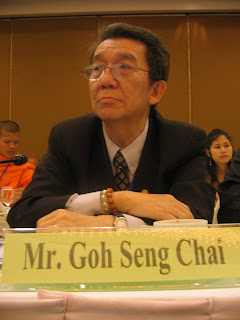
Chee Peck Kiat who is currently the Secretary General will be one of the candidates while Goh Seng Chai, a central committee member will be the other candidate offering themselves for the seat expected to be vacated by Ang. Chee Peck Kiat was formerly the president of the society from 1996 - 2001 while Goh Seng Chai has served as the Secretary General of the society intermittenly from 1982 and 2002.


Goh Seng Chai

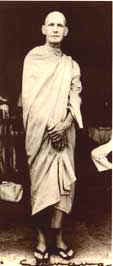
Both candidates who are in their sixties are not new to the Buddhist community and has been involved in Buddhist organisational activities since early 1960s. Co-incidentally both began to be linked to Buddhist activities during their youth days in Kuala Terengganu during the early days of Buddhist youth activism under the inspiration of the late Venerable Sumangalo (Robert S. Clifton) or more affectionately known as Father Sumangalo to those who were close to him.

Ven. Sumangalo


The Terengganu Buddhist Youth Circle (TBYC) was one of the active youth circles during that period. TBYC even hosted the Federation of Malaya Buddhist Youth Fellowship convention in 1964. While Buddhist youth conferences nowadays focus on discussion and planning, the said conference in 1964 focuses on sporting events, social visits and feasts, a reflection of the youth lifestyle during that time.


Ven Dhammananda

BMSM was form in 1962 by the late Ven Dr Kirinde Sri Dhammananda Nayaka Maha Thera or fondly known as "Chief" to his devotees and the Buddhist circles. One of the main objectives of the society is to encourage the study and propagation of Buddhism. Since its inception, to achieve its stated objectives, two of its main activities were conducting religious talks and publication of booklets and books in Buddhism for free distribution and sale.


Ven Dhammananda played the pivotal role in developing BMSM to a respectable and influential Buddhist organisation. He was a prolific writer and most if not all of the local titles in BMSM publication list were written by him. He gave Dhamma lectures practically in very nooks and corners of Malaysia.


No village is too rural or too far for him to travel, no crowd is too small or too young for him to address. He speaks the Dhamma to all. He speaks gently but firmly with compassion and wisdom. He carries the message of the Buddha and also BMSM's logo everywhere he goes since his publication is widely distributed. The late Chief is endeared by many and a Buddhist icon to many all over the world.


Ven Dhammananda gained his freedom from this world on 31 August 2006 and bequeated his wisdom and knowledge to the people through the millions of publications spread all over the world in multi languages. With his passing, BMSM also lost its Spiritual Director and General Advisor who always touch base with the developments and functions of the society.


After three years of his demised, it is time to review to gauge if BMSM still moving progressively based on the solid foundation laid by Ven Dhammananda or the society is now slowing down and began to live on past glories, surviving on the late Venerable's publication by repackaging its cover without releasing any new and comparable publication.


Within the BMSM circle, other than the limited number of lay persons who still vigorously contributes their time and efforts in delivering Dhamma talks especially in the English language in the name of BMSM, clearly there is no one in the robes that comes close to the late Venerable's stature in propagating Buddhism to the masses and plays the pivotal role in providing spiritual leadership to its members.


Most of the time we only realised our loss and began to grief when a person left and no more with us in this world. That is the reason we need to show our appreciation and gratitude when the person is still with us. It is due to this reason that in 2002 three individuals took the initiative to mobilised the Buddhist community all over Malaysia to confer the Lifetime Achievement Award to Ven. Dr K. Sri Dhammananda.


The three Buddhist workers Goh Seng Chai, Sarath W. Surendre and the author, has been closely associated with the venerable for many years. In less than two months they managed to collect more than 100,000 signature and messages from Buddhist devotees in Malaysia via postcards and a specially dedicated website. The Lifetime Achievement Award from the Malaysian Buddhist community was presented to the late Venerable on 9 December 2002 in front of about 600 Buddhist leaders from 20 countries.


The man is no more physically with us but we can cherish the good memories and follow the wisdom of the great man by continuing his good work started and consolidated by him. It is in this sense that the new leadership of BMSM need to continue the great work by Ven Dhammananda. BMSM as an national organisation with good links to the government and other local and international bodies need to live up to its name as a missionary society and focus on the core duties and obligations to the Buddhist community in Malaysia.


As members of the society, it is not too much to ask the next leadership to be more focus on the study and propagation of the Buddha-Dhamma. As usual there will be different opinions but if we keep to the main life-line of the society which is missionary work, the society should be able to do well to strengthen and protect the Buddhist presence, interest and influence in this country. - Loka

Thursday, May 14, 2009

Once in a Wesak

I used to be very occcupied with organising events in the month of May. The most important event of all was Wesak Day which usually falls on the first week of May. The other event falls on May 15 of each year which is the National Youth Day.
Wesak Day has been a busy day for me for many years since I graduated from university. The first few years was busy promoting and selling children story books based on the past life of the Buddha which is the Jataka Tales.
These books were produced by a group of Buddhist friends who graduated from UKM. I was handling the printing and marketing aspects while the others were involved in art work, story line and translation ( English to Chinese). We even recorded the stories on tape in a innovated "home" studio of an old friend.
Being in marketing, I know Wesak Day will be "The Day" to sell our books at the temples as that will be the day which attracts the most devotees to the temple. We know we have a good product but we need to have the right place, right timing and right crowd and all a troop of volunteer promoters to introduce and sell our books!
Using whatever contacts I have developed within the Buddhist community since my university days, stalls or counters selling our Jataka Tales books were set up in major Buddhist centres in Kuala Lumpur, Selangor and Penang. All the arrangement paid off as we managed to sell about 3,000 copies of the books within one day!
That was the good old days. Our sale counters are no more in existence at the temples during Wesak nowadays. The books are no more in print and the company publishing it already shut down. All of us had moved on with our own life. A dream to flood the market with the locally published Jataka Tales for the benefit of the local Buddhist children in mind remains buried in the heart. Maybe some day some one will seek this dream and realise it?
Whatever the end results of our past efforts, it is already in the past but one thing I am very sure. Those books that we published more than 15 years ago are still read by some Buddhist kids at the Sunday Dhamma schools or in the comfort of their homes. My kids read all those books and I am proud to tell them that their parents were part of the team that produced those books.
Some years later when I was leading the UKM Buddhist Alumni, I initiated the "mobile temple" concept where our group will pick a place or town which do not have a Buddhist temple and consecrate an "instant temple". While the intention was for our members and friends to celebrate the Triple Holy Day in communion and fellowship, the purpose was also to provide the opportunity for local residents to celebrate Wesak at our mobile temple.
The first place where a mobile temple was set up was at Frasers Hill which do not have a Buddhist temple or centre. We rented a colonial bungalow with a large hall and with the ingenuity of our members, we managed to transform the place into a temple overnite! The main altar was set up using customed-made tables which can be dismantled and transported even in a Kancil.
We raised and tied the Buddhist flags all around the "temple". Some of the local residents and tourists that managed to find our new temple was very happy indeed. The moment they steps into the shrine hall, they will find the Buddha welcoming them. Their happiness are reflected on their face when they kneel and bathe the Baby Buddha.
There were Wesak Dhamma talks by members of the Sangha, meditation in the cool atmosphere and the candle procession in the carpark. It was such a wonderful Wesak. At least tourists with Buddhist background will not miss their Wesak prayers. The idea was, if you do not go to the temple, the temple comes to you! - Loka